
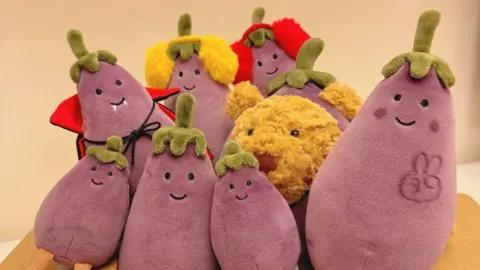
Stella Huang acquired her initial Jellycat brand cuddly companion during a time of unemployment during the global health crisis. Encouraged by an acquaintance's passion for these British-designed toys, her interest was fully ignited when she saw a unique gingerbread house design featured on a widely-used social networking platform.
Although The Christmas holiday is not widely celebrated across China, serving more as a commercial event than a religious festival, the imagery of festive cottages resonated to Stella. "It doesn't mean a lot to me... However, I always like the appearance of gingerbread houses," she remarks. This led her to eventually request a friend from her hometown to buy the item on her behalf.
That purchase occurred back in 2021, right as Jellycat was about to achieve massive popularity in China and internationally. "People were uneasy, and nobody knew what exactly was going to happen," says Stella, who picked up a routine of petting and hugging her plushies for comfort throughout that stressful time. Living in Beijing, which experienced some of the strictest lockdowns globally, she passed extended periods at home.
Now 32 with a new job as a tourism sector professional, Stella continues to grow her assortment. It has swelled to approximately 120 toys, representing a cost of roughly 36,000 yuan. "At my age, you have numerous matters you can't discuss with other people... and the problems we encounter are a lot more complex than before," she says with a sigh. "These soft toys help me managing my feelings."
Initially designed for children, these soft creatures have evolved into a global sensation, particularly within China where a increasingly disenchanted younger generation has been seeking solace in them as a source of emotional support.
The Rise of Adult Toy Enthusiasts
Stella's gingerbread cottage toy is part of their "Amuseable" series, a range of toys featuring small faces modelled after commonplace items, from toilet rolls and boiled eggs. These toys are considered a key "standout success" that "resonate with a broad Gen-Z and millennial audience" globally, according to industry analysts.
The surge in popularity "may have something to do with wanting for a sense of connection," propose experts. While it's hard to say for sure if the introduction of the iconic Amuseable line in 2018 was an intentional move to target the adult market, toy manufacturers increasingly must cultivate alternative audiences amid falling fertility rates across numerous countries.
Jellycat entered the Chinese market back in 2015. By laying the necessary "foundation", the toy maker was well-positioned to capture "the tone during Covid"—when people sought comfort during heightened anxiety—capitalizing on its early success there, as explained by business consultants.
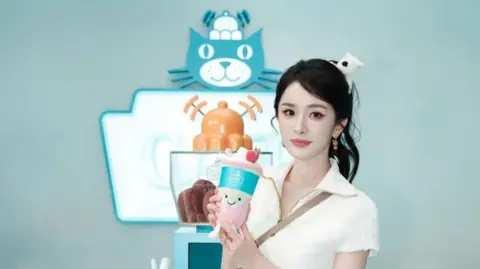
Its fame was also propelled by creative pop-up experiences. These retail events sometimes offered a selection of limited-edition "culinary" products. Many fans would film their experience being served and share the videos on social platforms.
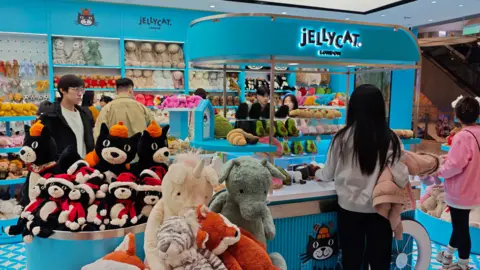
Localisation proved to be a core strategy. For instance, customers were able to buy stuffed toy interpretations of traditional British fare such as fish and chips at a pop-up in London. Conversely, items like teapot and teacup toys were sold at special stores in Beijing and Shanghai last year.
In 2024, the British company's sales reportedly increased by two-thirds to reach an impressive figure. During the same timeframe, sales of an estimated $117 million worth of its products to Chinese consumers on major e-commerce platforms, per research data.
This growth parallels a wider boom within China's collectable-toy market driven by adult consumers seeking emotional comfort and community. Overall sales from collectible items in China are expected to top 110 billion yuan this year, as per a recent analysis.
The remarkable success of other toys such as Labubu, elf-like figures by domestic company Pop Mart, underscores the market's increasing demand towards designer collectibles. This "kidult" phenomenon isn't unique to China; adults globally are increasingly re-evaluate "outdated understandings of what it means to be an adult," observe academics.
Amuseables, items like the eggplant character—affectionately dubbed "the boss" by Chinese fans—have inspired a wave of online jokes, where users expressing frustrations about adult life. On social media, the "eggplant boss" tag serves as a platform where fans sketch various emotive faces on their toy, showing it in various moods from drinking to fake-smiling.
For example, one Hong Kong-based, Wendy Hui, personalized her aubergine toy by drawing dark circles under its eyes and placing spectacles on the toy. She shared an image on a social platform with the caption: "The mood of employees at the start of the week." "I kept working from home even on time off," the 30-something says. "I just wanted to convey how exhausted I was."
Thus, Jellycat has become a surprising, whimsical outlet for young Chinese to voice their frustrations about economic challenges, where dedicated effort no longer guarantee comparable rewards. Amid heavy content regulation, digital spaces have become an important, if not the only, space for such discussions.
Its regular launches of exclusive products and the retirement of certain lines—a strategy sometimes referred to as "hunger marketing" in China—has further fueled {


